
Alexis Beauclair

Alexis Beauclair
Alexis Beauclair and the Language of Abstract Visual Narratives

Contemporary visual art continues to evolve beyond traditional storytelling, embracing form, rhythm, and spatial perception as narrative tools. Alexis Beauclair stands out as an artist whose work challenges the conventional boundaries of comics and illustration by prioritizing structure and movement over linear plot.

A Distinct Approach to Graphic Expression

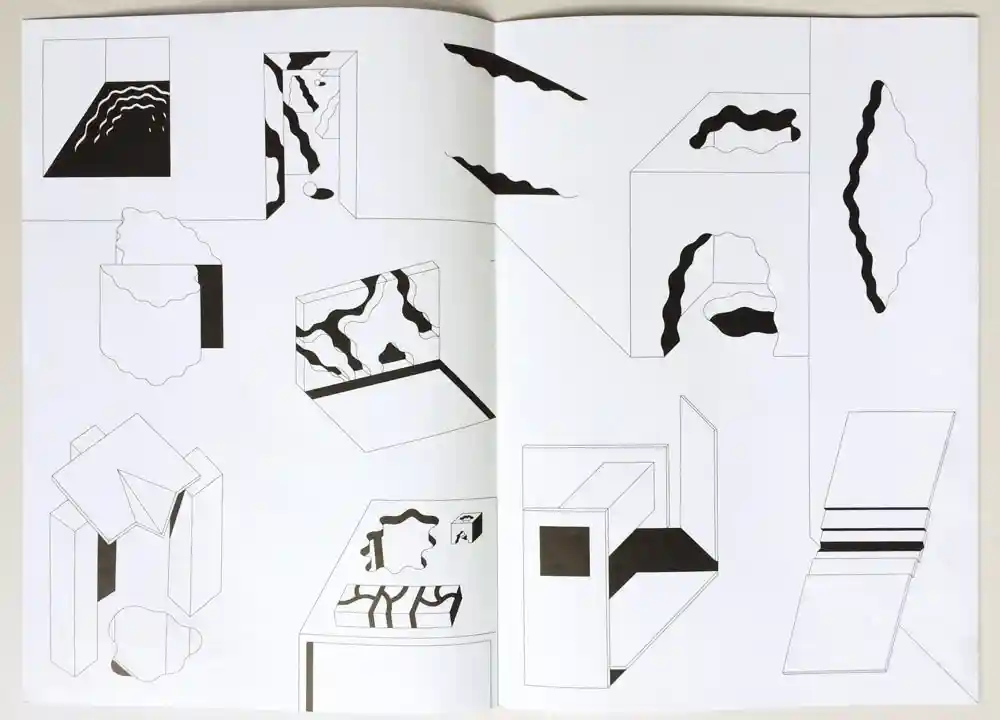
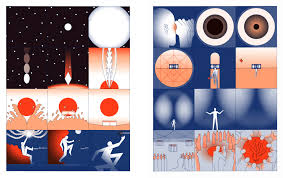
Educated in France, Beauclair developed a visual language rooted in geometry, repetition, and abstraction. Rather than relying on characters or dialogue, his compositions often use simple shapes, lines, and panel sequences to suggest motion and spatial transformation. This approach places his work at the intersection of fine art, experimental comics, and graphic design.

His books are not designed to be read in a conventional narrative order. Instead, readers are encouraged to engage visually, interpreting rhythm, pacing, and spatial logic through repetition and variation. Pages often function as sequences of movement, where meaning emerges from visual continuity rather than written explanation.

Publications and Independent Practice

A defining aspect of Beauclair’s career is his involvement in independent publishing and artist-led production. Through small presses and self-initiated projects, he has released graphic works that emphasize layout, print texture, and physical presentation. Techniques such as risograph printing and limited-edition formats reinforce the material quality of his books.

In works such as Loto and Vanishing Perspective, Alexis Beauclair demonstrates how minimal visual elements can produce complex perceptual experiences. These publications rely on strict formal systems, where subtle changes in shape, scale, or orientation guide the reader’s attention and perception across pages.

Influence and Contemporary Context

Beauclair’s work is frequently associated with experimental bande dessinée and contemporary illustration movements. His visual systems align closely with modern design thinking, where modular structures and abstraction are central to communication. This makes his work particularly resonant for audiences familiar with digital interfaces and visual navigation.

By reducing narrative to its structural core, Alexis Beauclair offers an alternative way of understanding storytelling—one that prioritizes perception, repetition, and spatial awareness over representation. His practice contributes to broader discussions about how images function as autonomous systems rather than mere carriers of text-based stories.